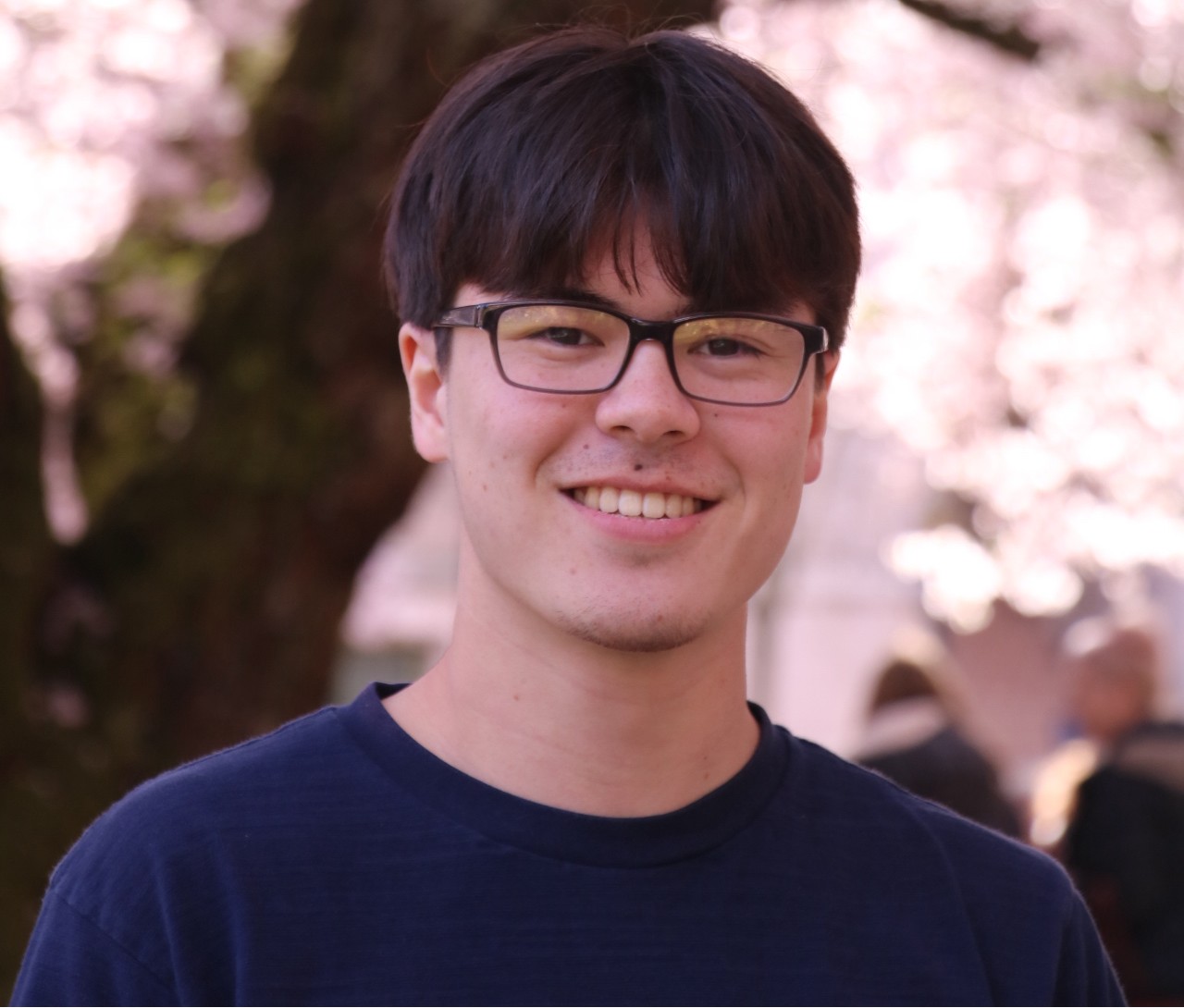
For economics major Kotaro Garvin, the UW Economics experience has been shaped by intentional involvement beyond the classroom. “My experience in the Economics major has been very self-directed in the best way,” Garvin shared, explaining that while the major’s credit requirements allow flexibility, the real value comes from engaging with the broader department. Participation in the Economics Undergraduate Board (EUB), the Honors Program, the Mentorship Program, and department events opened doors that coursework alone could not. As Garvin put it, “The more you put into the program, the more you get out of it.”
The Economics Honors Program has been the most transformative part of Garvin’s academic experience. Through the program, Garvin was introduced to economic research and the process of developing and carrying out original research questions. “Learning how to design and execute a research project and seeing how economists think has shaped both my academic interests and my long-term goals,” Garvin said. Working closely with faculty and gaining hands-on research experience helped clarify academic direction and reinforced the value of curiosity-driven learning.
Garvin’s involvement in the department has also fostered a strong sense of community. Serving on the Economics Undergraduate Board provided insight into the diversity of the economics major and the many paths students pursue. “Serving on the EUB has shown me how diverse the major really is,” Garvin noted, highlighting the challenge—and importance—of creating opportunities that serve a wide range of students. As a mentee in the Economics Undergraduate Mentorship Program, Garvin benefited from guidance and perspective from mentors who had already navigated the major and early career decisions, making the department feel more personal and connected.
That combination of academic preparation and community engagement carried into a recent summer internship at Alexander Hutton, a small M&A advisory firm in Seattle. In the role, Garvin supported transaction processes through market research and financial modeling, drawing on ways of thinking developed through economics coursework. “My economics coursework taught me how to think in terms of models and incentives,” Garvin shared. Looking ahead, Garvin is excited about upcoming EUB events and the Paul Heyne Seminars and plans to continue pursuing research after graduation. For fellow economics students, Garvin offered simple advice: “Talk to as many people as you can and don’t be afraid to ask for advice.”